When you buy through links on our articles, Future and its syndication partners may earn a commission.

Scientists using the world's most powerful solar telescope say they've finally observed small-scale magnetic twists on the sun — a discovery that may help solve the longstanding mystery of how the sun's atmosphere grows hotter the farther it extends from the surface.
The finding, based on data from the Daniel K. Inouye Solar Telescope in Hawaii, marks the first direct evidence of tiny twisting magnetic motions of energy-packed plasma waves in the sun's outer atmosphere, or corona, known as torsional Alfvén waves.
First predicted by Swedish Nobel laureate Hannes Alfvén in 1942, Alfvén waves are magnetic disturbances that travel through the plasma, the superheated, electrically charged gas that makes up the sun. Larger versions of these waves have been seen before, typically linked to solar flares, but the smaller, ever-present twisting kind had remained elusive — until now.
"This discovery ends a protracted search for these waves that has its origins in the 1940s," Richard Morton, a professor of engineering, physics and mathematics at Northumbria University in the U.K. who led the study, said in a statement.
Scientists have long suspected that these small-scale waves could continuously carry energy from the sun's surface into its atmosphere, powering the solar wind and heating the corona to millions of degrees, far hotter than the sun's visible surface, which is only about 9,932 degrees Fahrenheit (5,500 degrees Celsius).
The results offer crucial confirmation for theoretical models about how magnetic turbulence carries and dissipates energy in the sun's upper atmosphere, Morton added. "Having direct observations finally allows us to test these models against reality."
To arrive at their conclusions, Morton's team used data from the Inouye Telescope, which captures the highest-resolution images of the sun ever obtained. The four-meter-wide telescope can detect faint shifts in light that reveal how plasma moves through the corona, allowing scientists to see the sun in unprecedented detail.
During the telescope's commissioning phase in October 2023, the team tracked iron atoms heated to 1.6 million degrees Celsius and spotted faint red and blue shifts on opposite sides of magnetic loops, which were the telltale signature of twisting Alfvén waves, according to the study.
These waves twist the sun's magnetic field lines like a corkscrew, but the motion is too subtle to spot directly in images, scientists say. To detect them, Morton's team used spectroscopy, a technique that measures how hot gas moves toward or away from Earth. This motion slightly changes the light's color, red when moving away, blue when moving closer, thereby revealing the hidden twisting pattern in the sun's atmosphere.

"The movement of plasma in the sun's corona is dominated by swaying motions," Morton said in the statement. "These mask the torsional motions, so I had to develop a way of removing the swaying to find the twisting."
The results show that even in the sun's calmest regions, the corona is riddled with torsional Alfvén waves. These torsional Alfvén waves constantly turn the sun's magnetic field lines back and forth, carrying energy upward through its layers. These waves transport energy from the lower atmosphere into the corona, where it's released as heat, offering new insight into why the sun's outer atmosphere is millions of degrees hotter than its surface.
For Morton and his colleagues, the long-sought detection opens new potential investigations into how these waves propagate and dissipate energy in the corona.
A paper about these results was published on Oct. 24 in the journal Nature Astronomy.
NEUESTE BEITRÄGE
- 1
 Gulf aluminum output tumbles on Iran war02.04.2026
 - 2These 3 Nail-Free Finds Completely Transformed My Drab Bathroom13.12.2025
- 3The Manual for Decent European Urban communities in 202405.06.2024
- 4Transform the daily grind to make life more interesting – a philosopher shares 3 strategies to help you attain the good life04.01.2026
- 5The wolf supermoon will kick off 2026 with a celestial bang. Here's when and how to see it.30.12.2025


Ähnliche Artikel
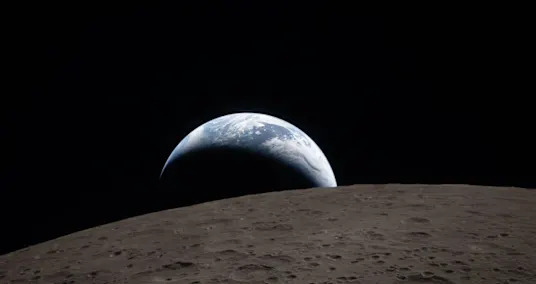
- Artemis 2 captures historic 'Earthset' photo | Space photo of the day for April 7, 202607.04.2026
- Tesla Germany Registrations Quadruple to 9,252 Vehicles in Best March Ever07.04.2026
- What's going on with Katseye? The Manon Bannerman hiatus drama, explained.07.04.2026
- Two IDF officers, civilian face indictment in alleged Gaza aid-truck smuggling scheme07.04.2026
- West Palm Beach Shorecrest, renderings of downtown waterfront condo07.04.2026
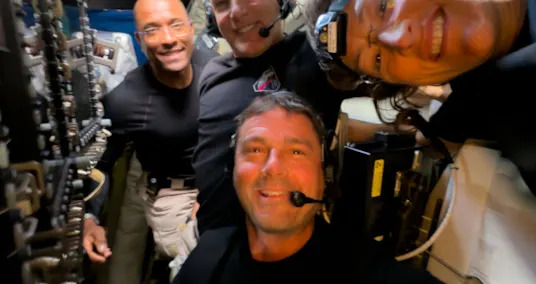
- Artemis II astronauts make long-distance call to the space station as they head home from the moon07.04.2026
- Tuesday, April 7. Russia’s War On Ukraine: News And Information From Ukraine07.04.2026
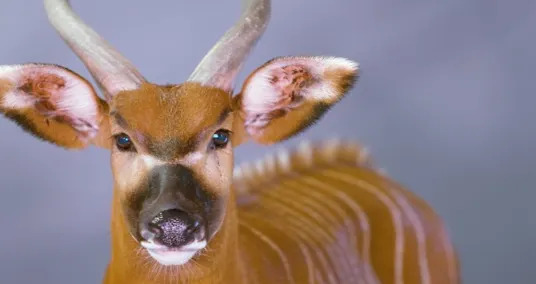
- The Eastern Bongo, Kenya’s Rare Forest Antelope on the Brink07.04.2026
- U.K. blocks Kanye West from entering Britain to headline now canceled festival: What led to the ban07.04.2026
- Russia confirms 16 Cameroonian soldiers killed in Ukraine war07.04.2026
- First Phosphate advances battery-grade phosphate project as analysts highlight strategic Federal support07.04.2026
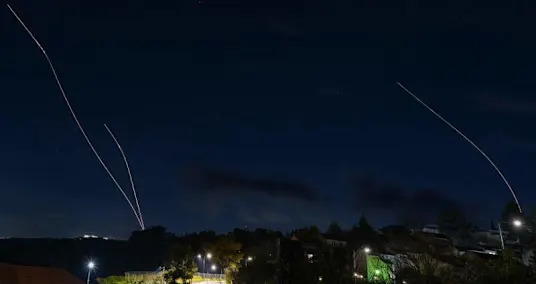
- After fleeing past Hezbollah fighting, some Israelis on northern border vow to stay07.04.2026
- 'Unreal' solar eclipse: Artemis 2 crew just saw one of the rarest sights in spaceflight history07.04.2026
- Chinese construction workers in Israel: 'I’d rather be bombed than live in poverty'07.04.2026
- Broken toilet, T-shirts on windows and collecting saliva: The weirdness of daily life aboard Orion07.04.2026
- Czech Republic caps fuel prices amid Iran war energy crisis07.04.2026
- NASA releases stunning new images captured by the Artemis II moon mission, including 'Earthset' and a solar eclipse from space07.04.2026
- Amid Iran war, 53 of Israel's future scientists showcase projects in Jerusalem contest07.04.2026
- Iranian-linked drone attack kills Kurdish couple in northern Iraq07.04.2026
- Thousands of small fish defy gravity to climb Congo waterfall07.04.2026