To date, the IDF and the Shin Bet (Israel Security Agency) have succeeded in catching and stopping such efforts, but some of the rocket building efforts have progressed to later stages.
Despite a recent wave of “lone-wolf”-style terror attacks, the IDF is confident that its strategy of keeping large forces in Palestinian West Bank refugee camps long-term will quell the escalation, The Jerusalem Post has learned.
Since January 2025, the IDF has started a policy of keeping around a company of soldiers semi-permanently stationed in the heart of the Jenin, Tulkarm, and Nur al-Shams refugee camps.
The Post understands that these forces are expected to remain in these locations indefinitely in 2026, one of the reasons IDF sources argue that terror trends are down in the West Bank.
Recently, IDF sources told the Post that each of the terror attacks that hit Israel in recent weeks was either a lone-wolf attack or, at the very least, disconnected from any terror group.
This includes the killing of multiple Israelis in the North in late December and the Gush Etzion terror attack in November – some of which involved multiple terrorists, but none of which was connected to organizations or left the kinds of footprints that longer-term, well-planned attacks tend to leave.

Acknowledging that the IDF has not been able to shut down these terror attacks, the IDF has made a more nuanced argument, contending that the overall security picture is much better going into 2026 than it has been in the last few years.
As evidence for this argument, the IDF has presented statistics showing that overall terror levels fell in 2025 and the last few months, even if in the last couple of weeks, there was a spike in deadly terror attacks.
Overall terror levels, noted IDF sources, means a mix of analyzing organization-sponsored terror attacks (which are not happening as much and which would be the most concerning if they were), lone-wolf terror attacks, medium-grade attacks (throwing Molotov cocktails), low-grade attacks (rock-throwing and rioting that does not lead to deaths), and the general feeling of security that Jewish residents in the West Bank feel when traveling around.
For example, when such residents travel through gates to Jewish villages or key junctions between villages, they see a larger number of well-armed soldiers deployed and ready to engage any trouble-makers than they would in earlier periods when there were fewer soldiers deployed.
In earlier periods, there might have been as few as 10-13 IDF battalions, whereas currently there are around 20.
It should be noted that in peak periods of terror, the number of battalions has reached 30, but the IDF would argue that maintaining a certain level of stability with only 20 battalions, less than the maximum available, shows a greater level of control.
Returning to the soldiers stationed within the refugee camps, these activities have also led to destroying or occupying some of the refugee camp housing, which in turn has led to an estimated 35,000 Palestinians losing their residences.
This phenomenon has been described by critics as the largest new Palestinian displacement in the West Bank since 1967.
The IDF acknowledged that Israel is paying a price for its security activities, but said that it has been necessary to crack down on the organized terror and violence that had been emanating from these refugee camps.
One issue where the IDF’s activities have had more limited success, though sources argue there is still some progress, is reducing, usually nonviolent, border infiltration by West Bank Palestinians.
Most of those cutting through or climbing IDF fences or sneaking into Israel in the 39% of areas that are partially patrolled but unfenced are nonviolent and merely seeking employment, given that the war and IDF operations have substantially harmed employment in Palestinian areas.
IDF provides greater security through frequent proactive operations
However, Israel still views the illegal border infiltration phenomenon as dangerous, as often terrorists penetrate the border along with a group of nonviolent Palestinians, using them for cover.
In a December 23 report by the state comptroller, it was revealed that the security fence for 39% of West Bank and east Jerusalem areas was never completed, though it was started in the mid-2000s, and has been periodically added to.
The IDF has recognized that finishing the fence would help security, but has said that this is a decision for the security cabinet, adding that October 7 proved that even a complete and hi-tech fence does not provide full security.
Rather, the Post understands that the IDF is trying to provide greater security against border infiltration by frequent proactive operations and also laying passive ambushes to catch infiltrators in key problem areas.
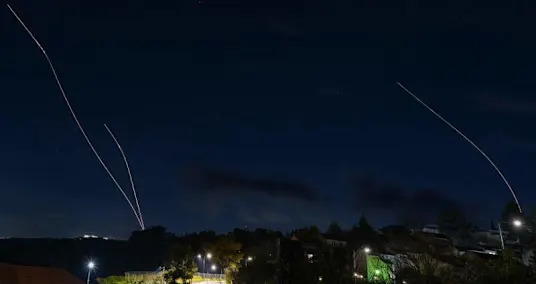
The last couple of years have also seen increased efforts by Palestinian West Bank terrorists to acquire and build rockets to fire directly into Israeli communities from short ranges and a new front.
To date, the IDF and the Shin Bet (Israel Security Agency) have succeeded in catching and stopping such efforts, but some of the rocket-building efforts have progressed to later stages.
When the IDF seized rocket materials recently, the military admitted that the threat had advanced to a potentially more dangerous stage, leading security forces to arrest an entire cell of those suspected to be involved.
Despite reassurances about the defense establishment having the West Bank rocket threat under control, the fact that the terror cell in question got as far as it did, even if it fell short of pulling off an attack, raises the specter of a future terror cell succeeding.
Regarding extremist Jewish violence against West Bank Palestinians, the IDF generally believes it is making progress on the issue, but acknowledged that the volume of such incidents is still far too high.
Interestingly, although the IDF and Shin Bet have complained about the police failing at their law enforcement role on this issue for much of the time since National Security Minister Itamar Ben-Gvir took over the police in early 2023, IDF sources complemented the police in recent joint enforcement efforts.
The Post reported on December 24 that after ignoring the issue for most of the last three years, Prime Minister Benjamin Netanyahu may finally have taken the issue more into his own hands, circumventing Ben-Gvir, along with Police Commissioner Daniel Levi and West Bank Police Commander Moshe Finchi.
After a particularly massive attack by Jewish extremists on Palestinians in late November, Finchi was empowered to establish a special unit targeting the couple of hundred Jewish extremists, in some ways replacing the Shin Bet unit that used to work on the issue prior to Defense Minister Israel Katz tying some of the intelligence agency’s hands from using certain tools.
According to data from the new unit, in the first four weeks of its operation, it has brought down the 29 incidents in one week to 12, and the six grave incidents to two.
The police said this represented a 58% general decrease in incidents and a 67% decrease in grave incidents.
While it is unclear whether this is a blip or a true shift to cracking down on Jewish extremist violence, IDF sources confirmed positive momentum on the issue.
NEUESTE BEITRÄGE
- 1
 German police 'cleared path for fascists with batons,' protesters say30.11.2025
 - 2Artemis 2 astronaut Victor Glover delivers inspiring Easter message on the way to the moon (video)05.04.2026
- 3Monetary Freedom Guide: Plan Your Future01.01.1
- 4New York to require social media platforms to display mental health warnings26.12.2025
- 5The Best Cell phone Brands for Tech Aficionados07.07.2023




Ähnliche Artikel
- Artemis 2 captures historic 'Earthset' photo | Space photo of the day for April 7, 202607.04.2026
- Tesla Germany Registrations Quadruple to 9,252 Vehicles in Best March Ever07.04.2026
- What's going on with Katseye? The Manon Bannerman hiatus drama, explained.07.04.2026
- Two IDF officers, civilian face indictment in alleged Gaza aid-truck smuggling scheme07.04.2026
- West Palm Beach Shorecrest, renderings of downtown waterfront condo07.04.2026
- Artemis II astronauts make long-distance call to the space station as they head home from the moon07.04.2026
- Tuesday, April 7. Russia’s War On Ukraine: News And Information From Ukraine07.04.2026
- The Eastern Bongo, Kenya’s Rare Forest Antelope on the Brink07.04.2026
- U.K. blocks Kanye West from entering Britain to headline now canceled festival: What led to the ban07.04.2026
- Russia confirms 16 Cameroonian soldiers killed in Ukraine war07.04.2026
- First Phosphate advances battery-grade phosphate project as analysts highlight strategic Federal support07.04.2026
- After fleeing past Hezbollah fighting, some Israelis on northern border vow to stay07.04.2026
- 'Unreal' solar eclipse: Artemis 2 crew just saw one of the rarest sights in spaceflight history07.04.2026
- Chinese construction workers in Israel: 'I’d rather be bombed than live in poverty'07.04.2026
- Broken toilet, T-shirts on windows and collecting saliva: The weirdness of daily life aboard Orion07.04.2026
- Czech Republic caps fuel prices amid Iran war energy crisis07.04.2026
- NASA releases stunning new images captured by the Artemis II moon mission, including 'Earthset' and a solar eclipse from space07.04.2026
- Amid Iran war, 53 of Israel's future scientists showcase projects in Jerusalem contest07.04.2026
- Iranian-linked drone attack kills Kurdish couple in northern Iraq07.04.2026
- Thousands of small fish defy gravity to climb Congo waterfall07.04.2026